Teotihuacan, Mexico – June 2016
About 50 km northeast of Mexico City sit the ruins of Teotihuacan, one of the great cities of the ancient Americas. At its peak around 100–450 AD, as many as 200,000 people may have lived here — enough to put it among the largest cities in the world at the time. Walking the site today, you can still feel the scale of that ambition in stone.
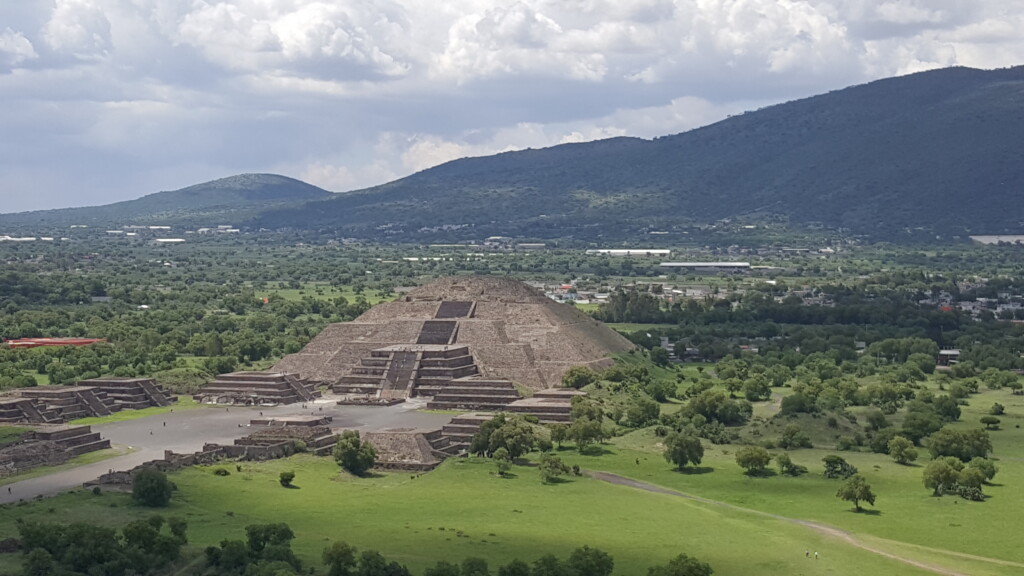
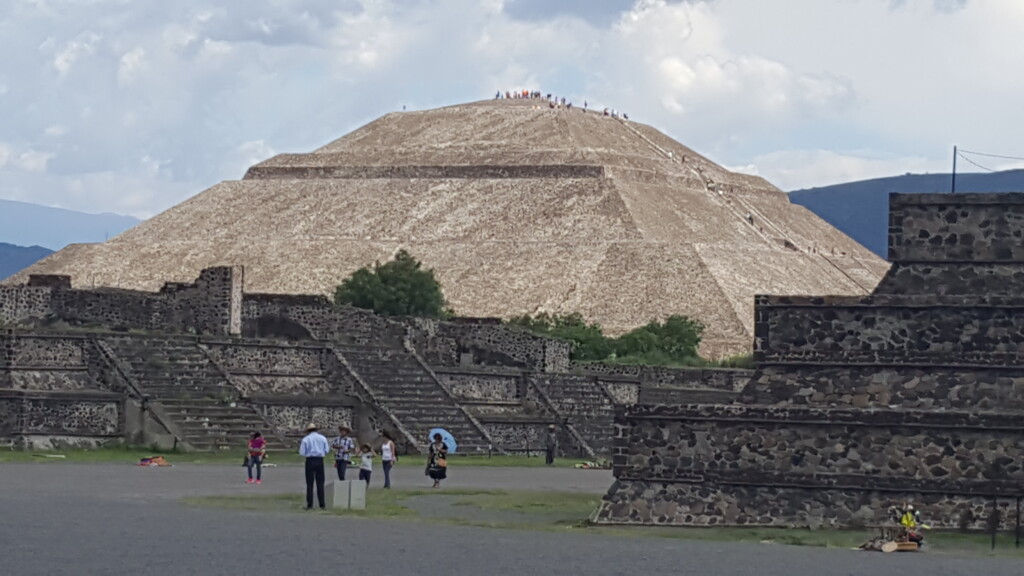
Two pyramids dominate the skyline: the Pyramid of the Sun, among the largest in the Americas, and the Pyramid of the Moon at the north end of the long ceremonial spine known as the Avenue of the Dead. Platforms and plazas line that avenue for well over a mile, laid out with a precision that still impresses visitors centuries later.
Nobody knows for sure who built Teotihuacan. It was not the Aztecs — they came upon the abandoned ruins centuries later and gave the place the Nahuatl name we still use, usually translated as “the place where the gods were born.” What the original builders called their city has been lost.
The city’s core monuments were burned around the mid-6th century, and the population fell sharply by about 550–650 AD. Even in ruin it never quite left the map of Mesoamerican memory, and in 1987 UNESCO named Teotihuacan a World Heritage Site.
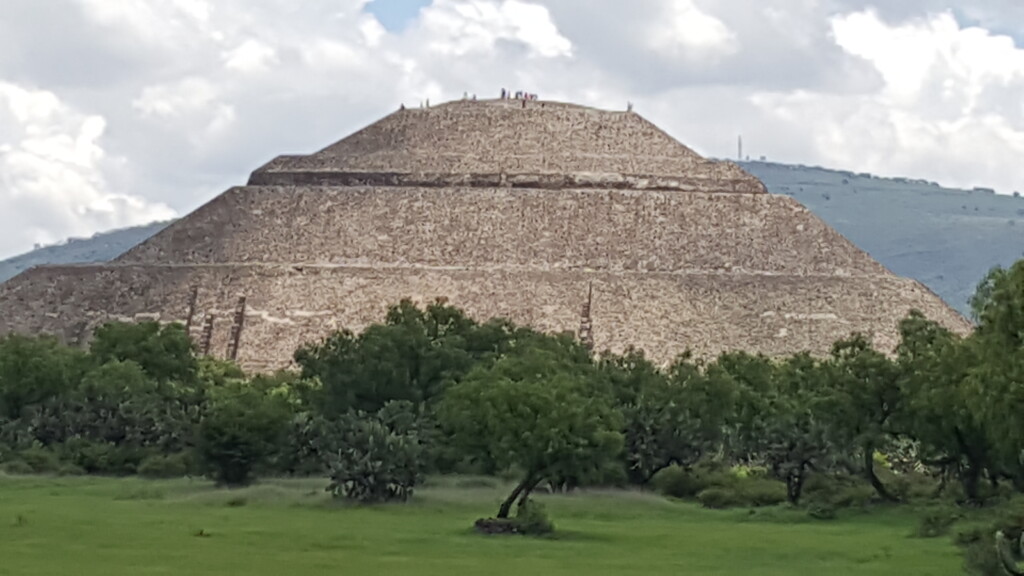
Pyramid of the Sun
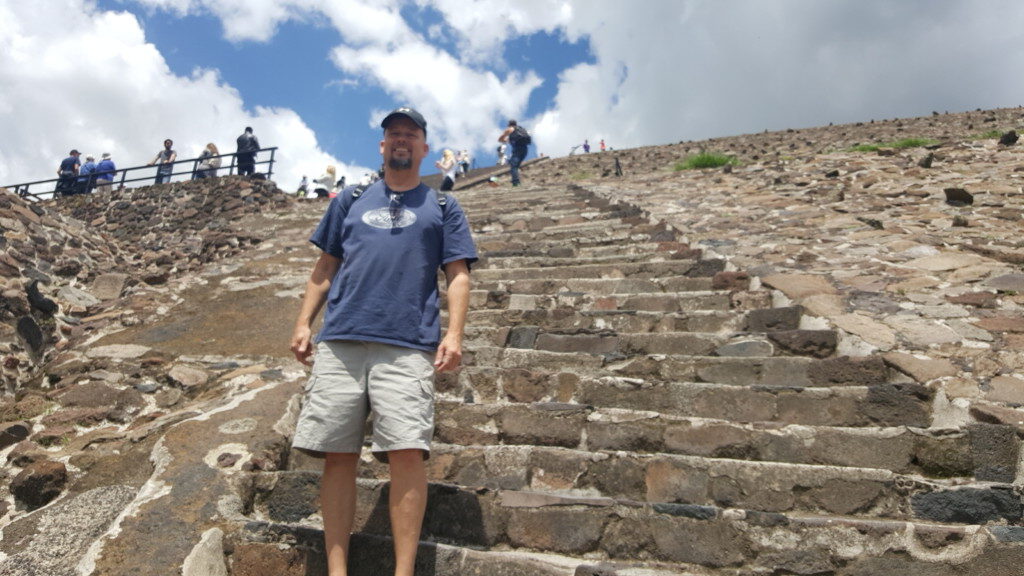
The Pyramid of the Sun rises in stepped tiers over the valley. From a distance it anchors the whole site; up close, the stone staircases make the climb — and the view — part of the story.
Avenue of the Dead and the Pyramid of the Moon
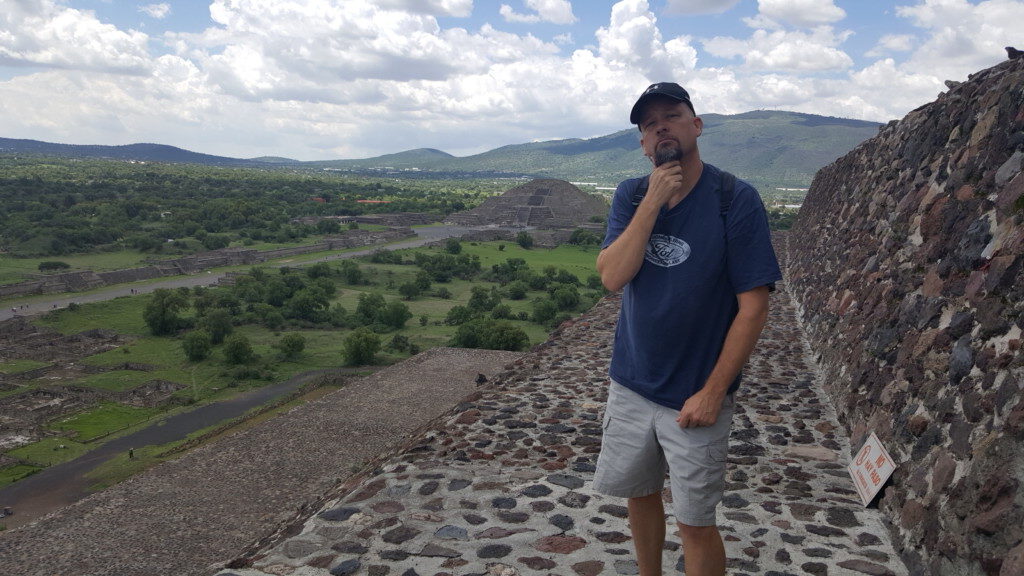
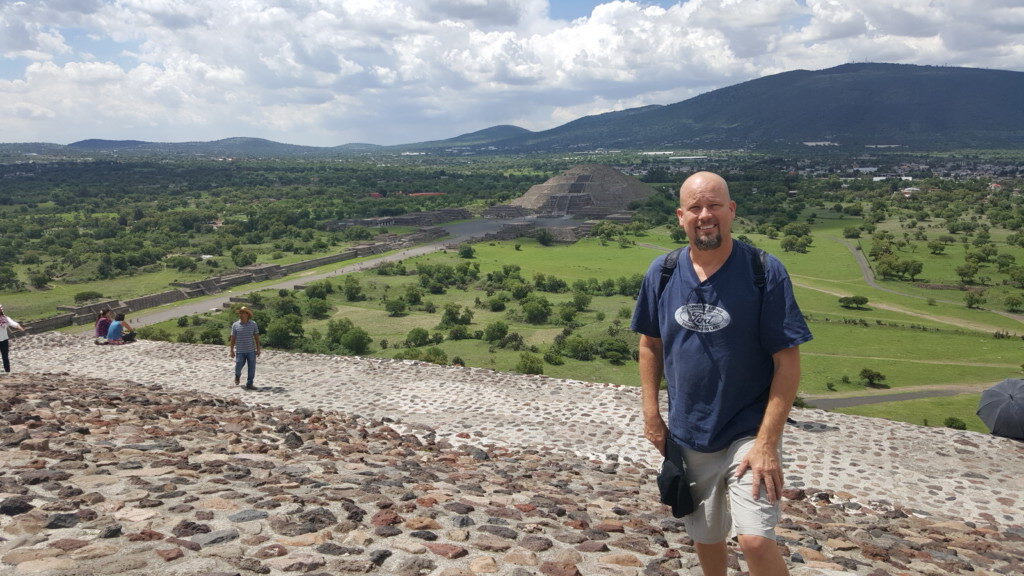
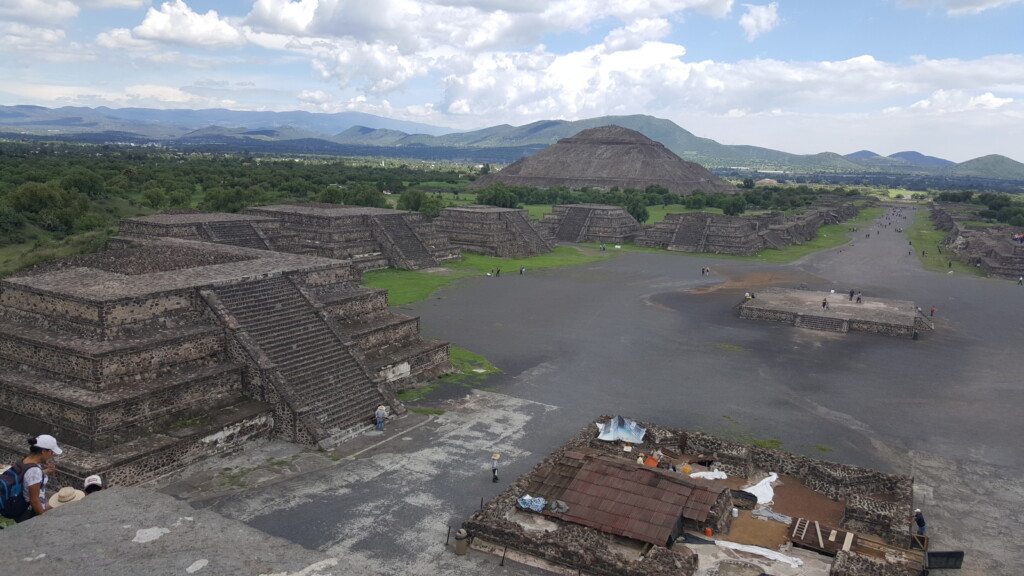
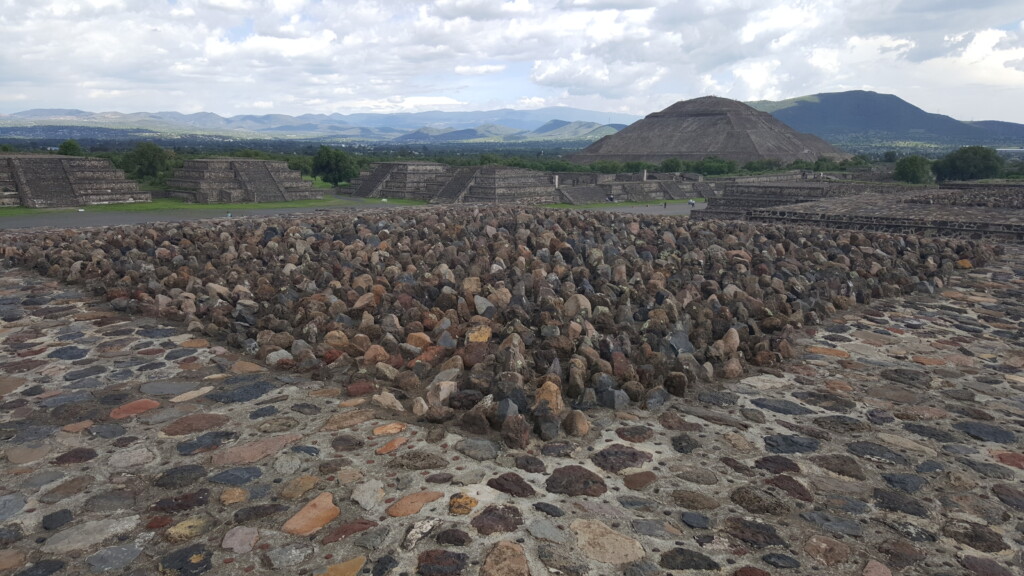
The Avenue of the Dead runs north toward the Pyramid of the Moon, with Cerro Gordo rising behind it. Smaller platforms and plazas step off the avenue on both sides.
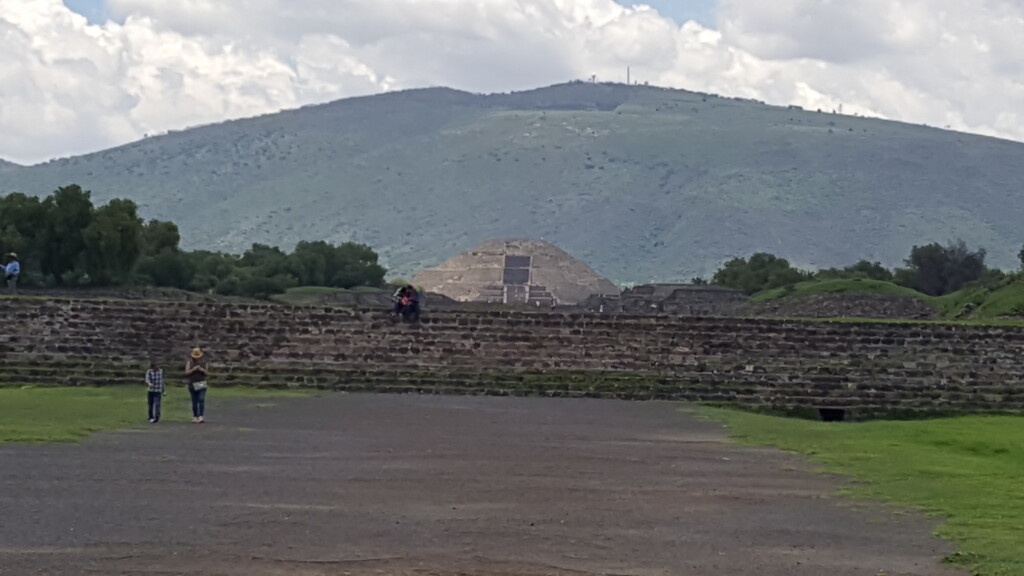
Platforms and plazas
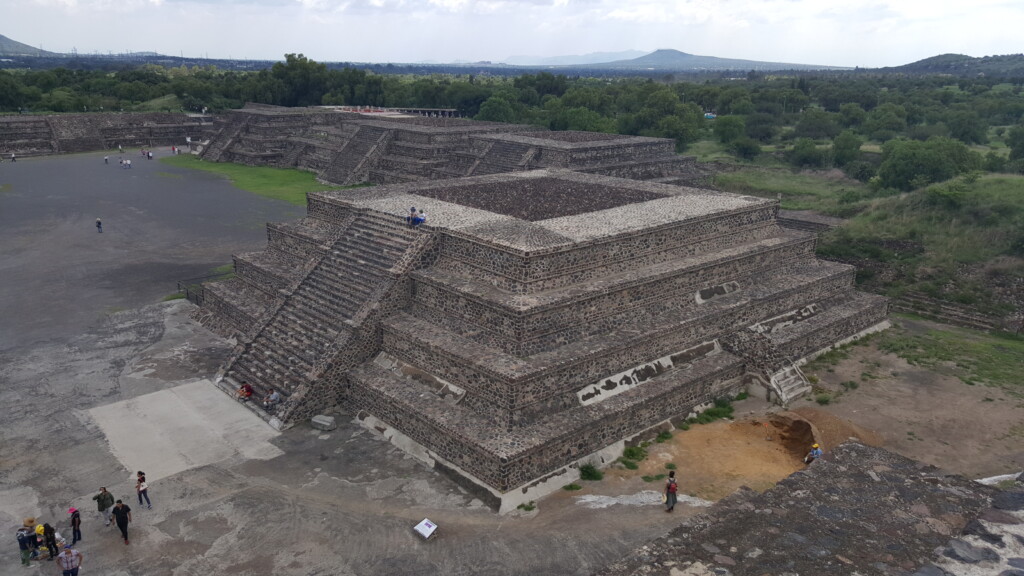
Along the avenue, stepped platforms in the classic talud-tablero style frame open plazas — a reminder that Teotihuacan was a planned city, not just a pair of pyramids.
Next stop: Mexico City